
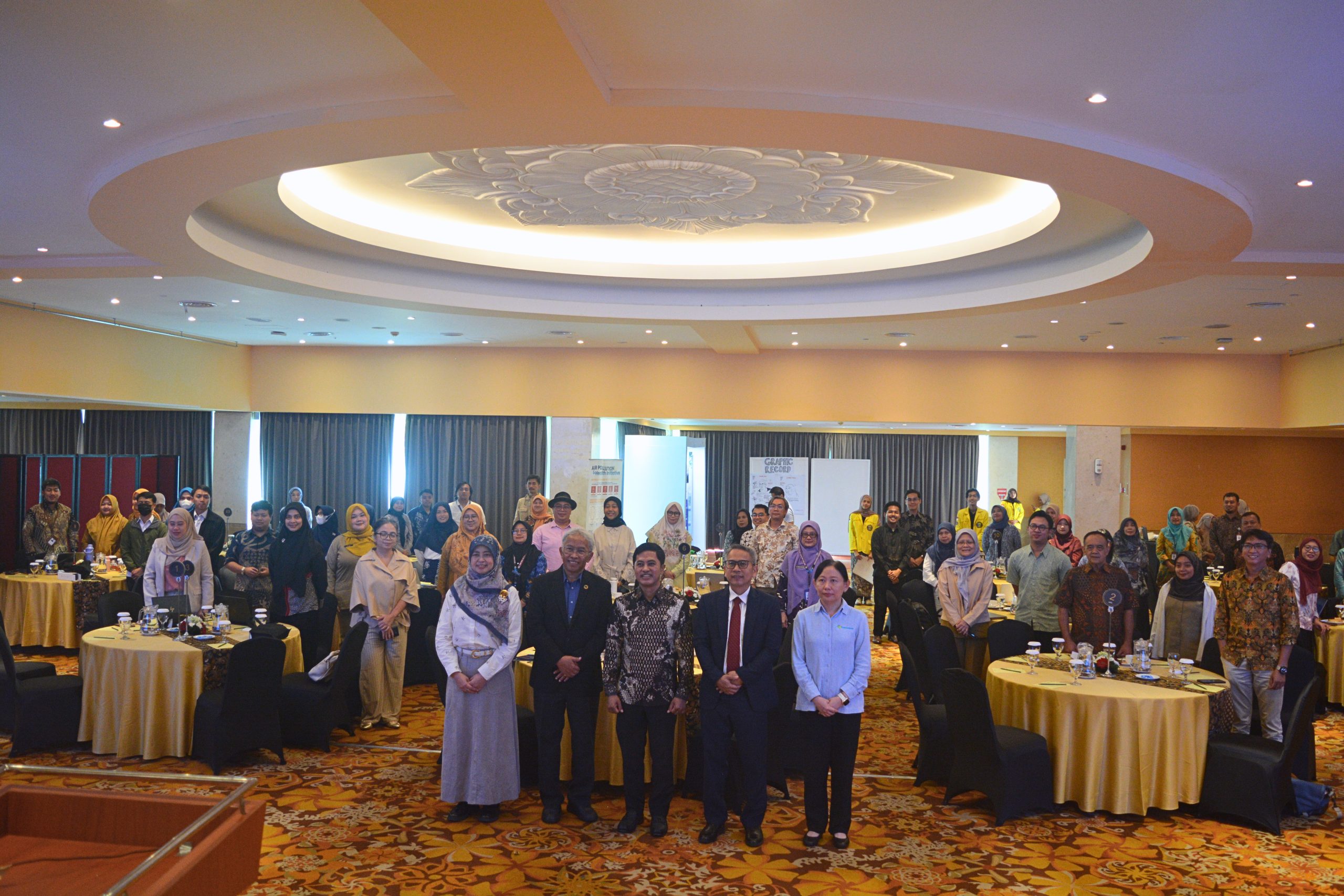
Air pollution remains one of the most significant environmental health challenges in Indonesia. Despite the availability of air quality monitoring data and health surveillance information across multiple institutions, these datasets often exist in separate systems, limiting their potential to support timely public health action. To address this challenge, the Research Center for Climate Change Universitas Indonesia (RCCC UI), in collaboration with Yayasan Visi Indonesia Raya Emisi Nol Bersih (ViriyaENB), convened a National Seminar on Integrating Air Quality and Health Data: Building an Early Warning System on 18 May 2026 at Hotel Borobudur, Jakarta. The seminar brought together policymakers, researchers, public health professionals, environmental experts, and development partners to explore pathways toward a more integrated and evidence-based approach to air pollution management.
The seminar was held in two sessions, consisting of keynote presentations and a panel discussion. The keynote presentations were delivered by Prof. dr. Dante Saksono Harbuwono, Sp.PD-KEMD, Ph.D., Vice Minister of Health of the Republic of Indonesia, and Dr. Rasio Ridho Sani, M.Com., M.P.M., Deputy for Environmental Pollution and Damage Control at the Ministry of Environment of the Republic of Indonesia. The speakers provided strategic perspectives on the current state of air quality monitoring, health surveillance systems, and data governance in Indonesia. They emphasized the need for stronger integration of air quality and health information systems as a foundation for developing an effective early warning system to mitigate the health impacts of air pollution, particularly among vulnerable populations.
Panel discussions were joined by public health workers, NGOs, and fellow academicians. In this session, speakers stressed that Indonesia already possesses substantial environmental and health data resources; however, these datasets remain fragmented across sectors, limiting their potential to support evidence-informed decision-making. The discussion also talks about how building early warning systems is not only about ensuring the access and the quality of the data but also how to communicate the data to the public.
The seminar concluded with a shared commitment to advancing data integration efforts and strengthening evidence-based policymaking. Recommendations generated through the discussions will contribute to the development of policy briefs and strategic guidance aimed at supporting national efforts to reduce the health burden of air pollution and improve environmental governance.
Through this initiative, RCCC UI and ViriyaENB reaffirm their commitment to supporting collaborative research, knowledge exchange, and policy development that promote cleaner air and healthier communities. Strengthening the link between air quality and health data is an important step toward building a more responsive public health system and reducing the impacts of air pollution across Indonesia.
